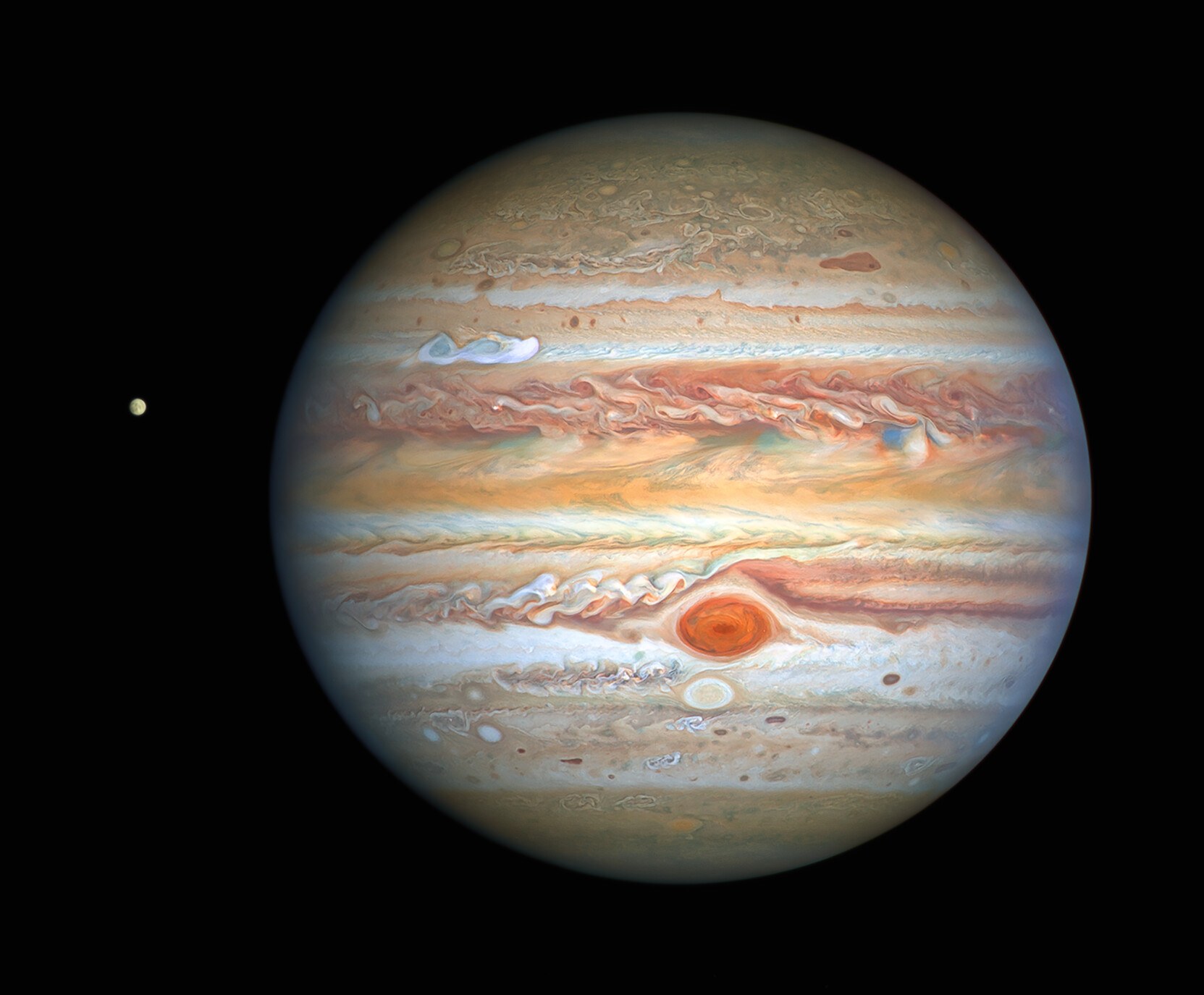
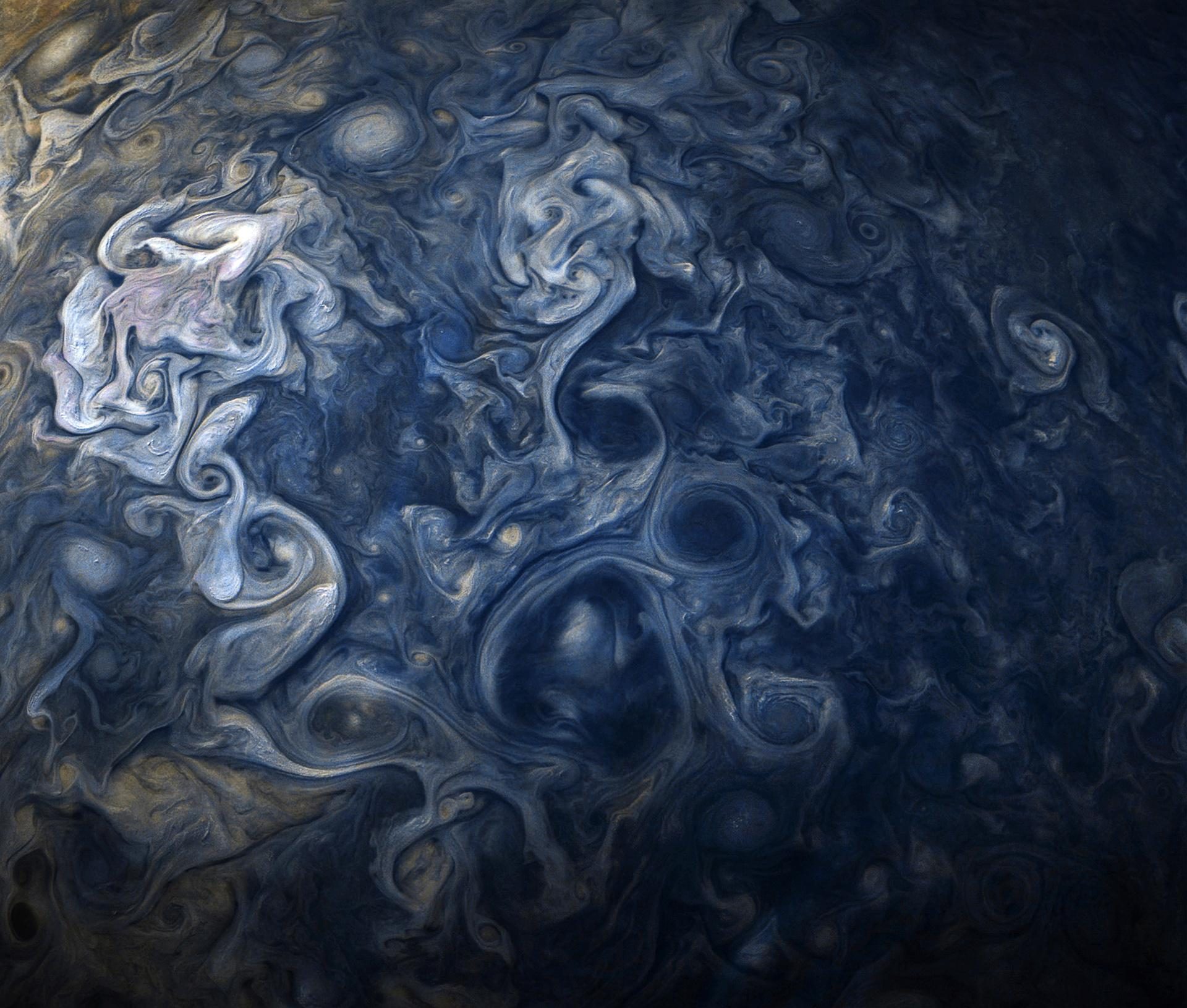
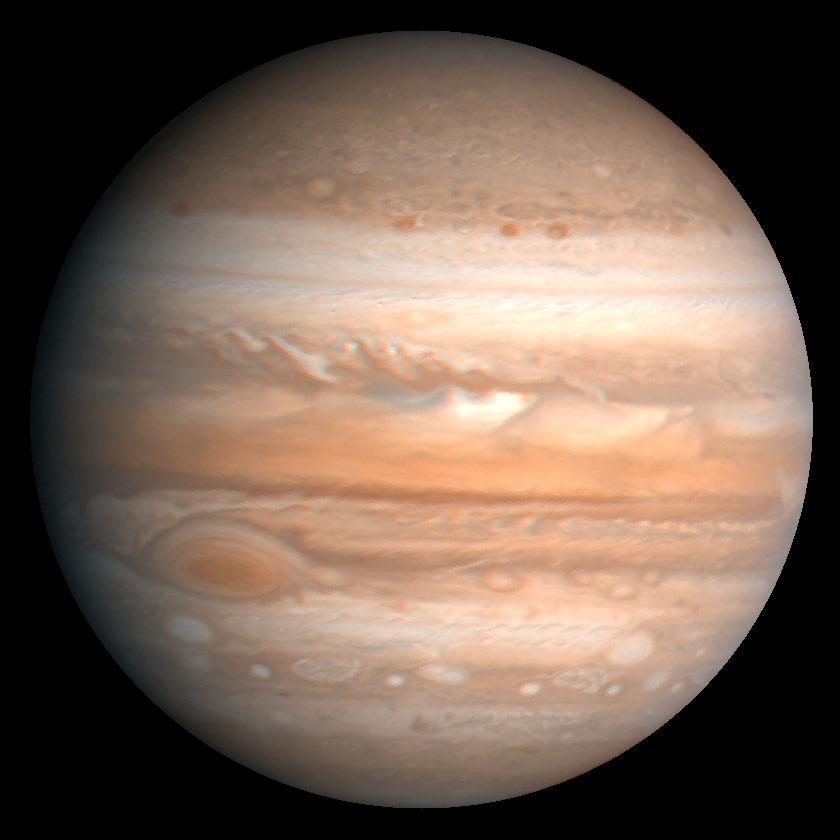
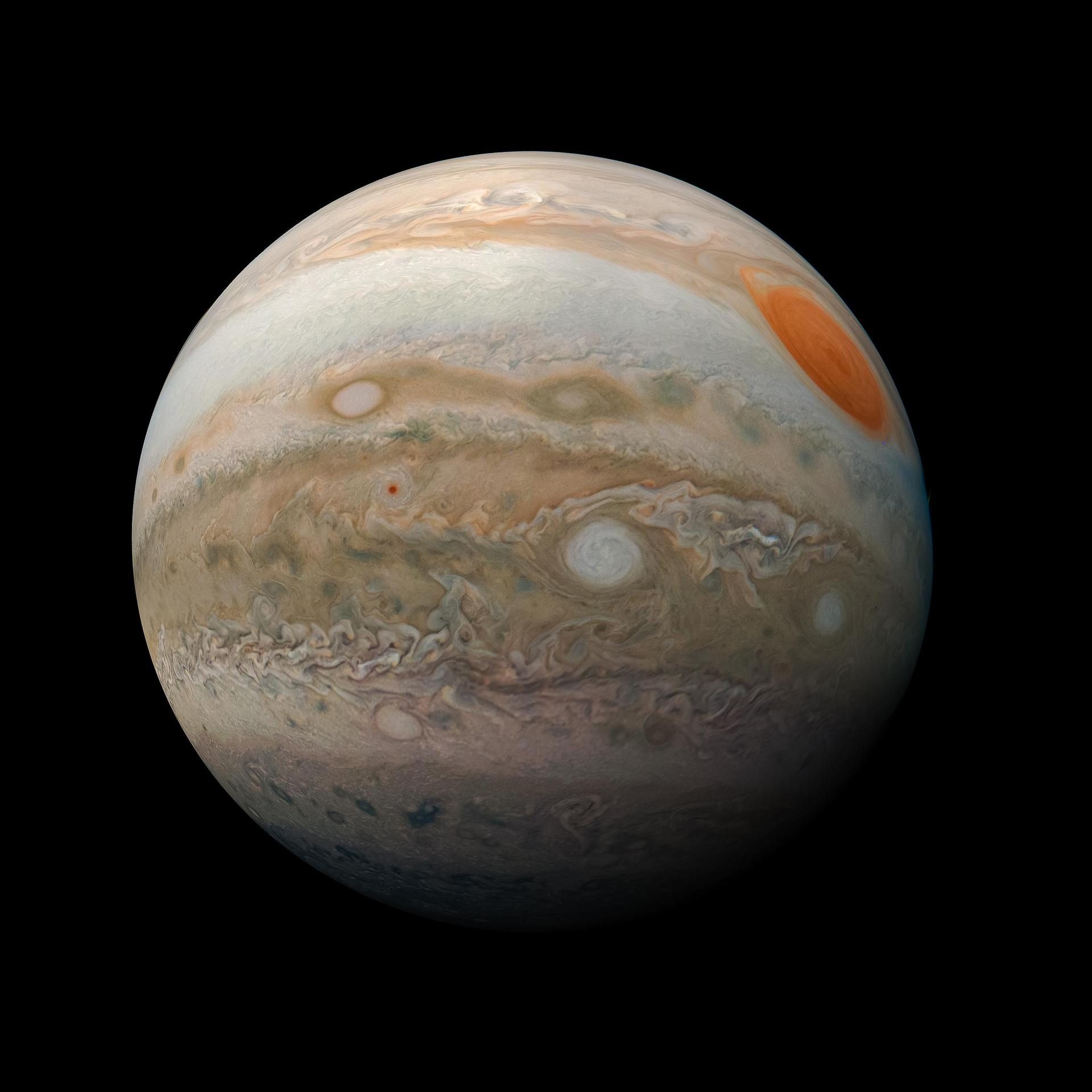
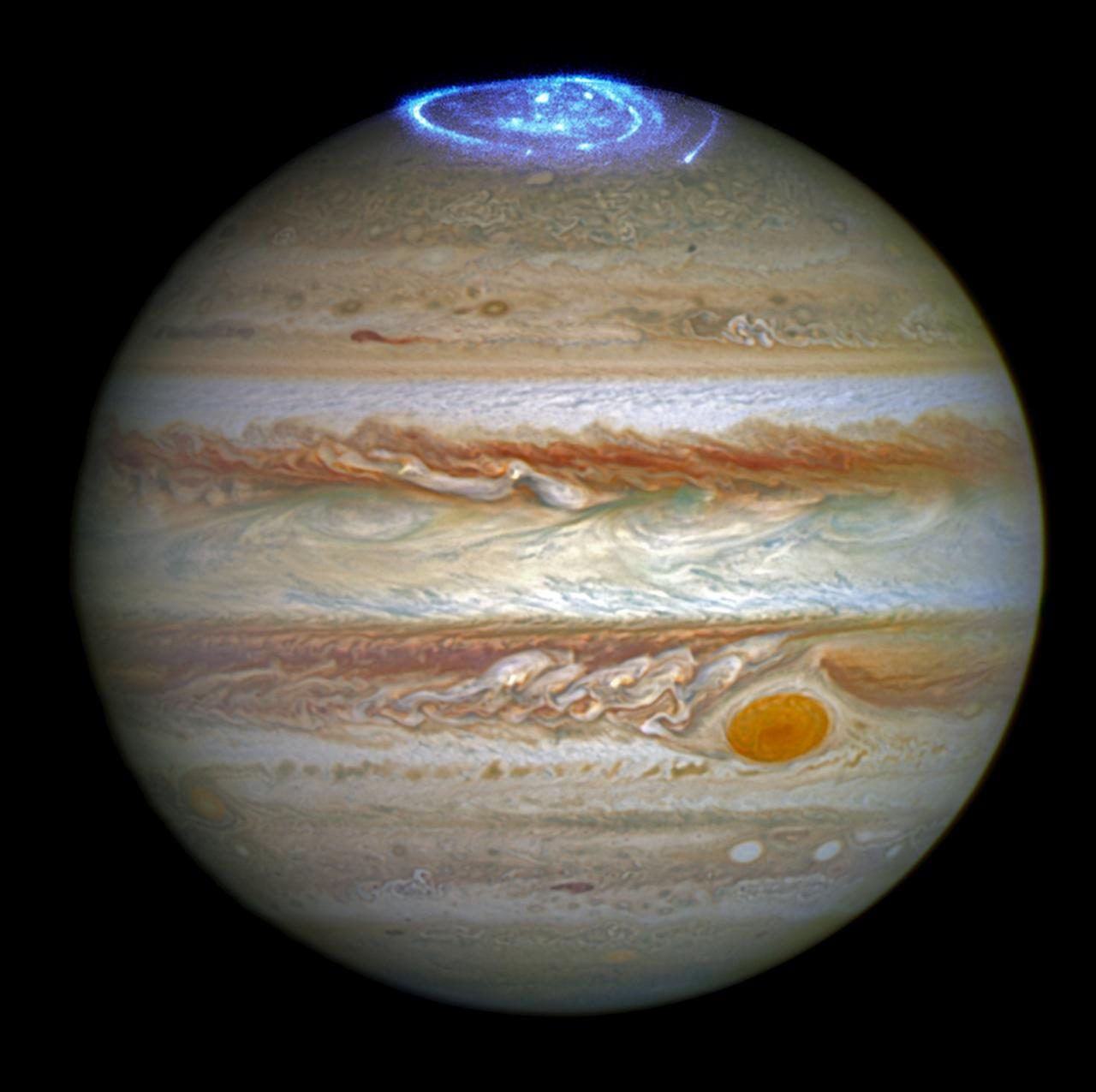
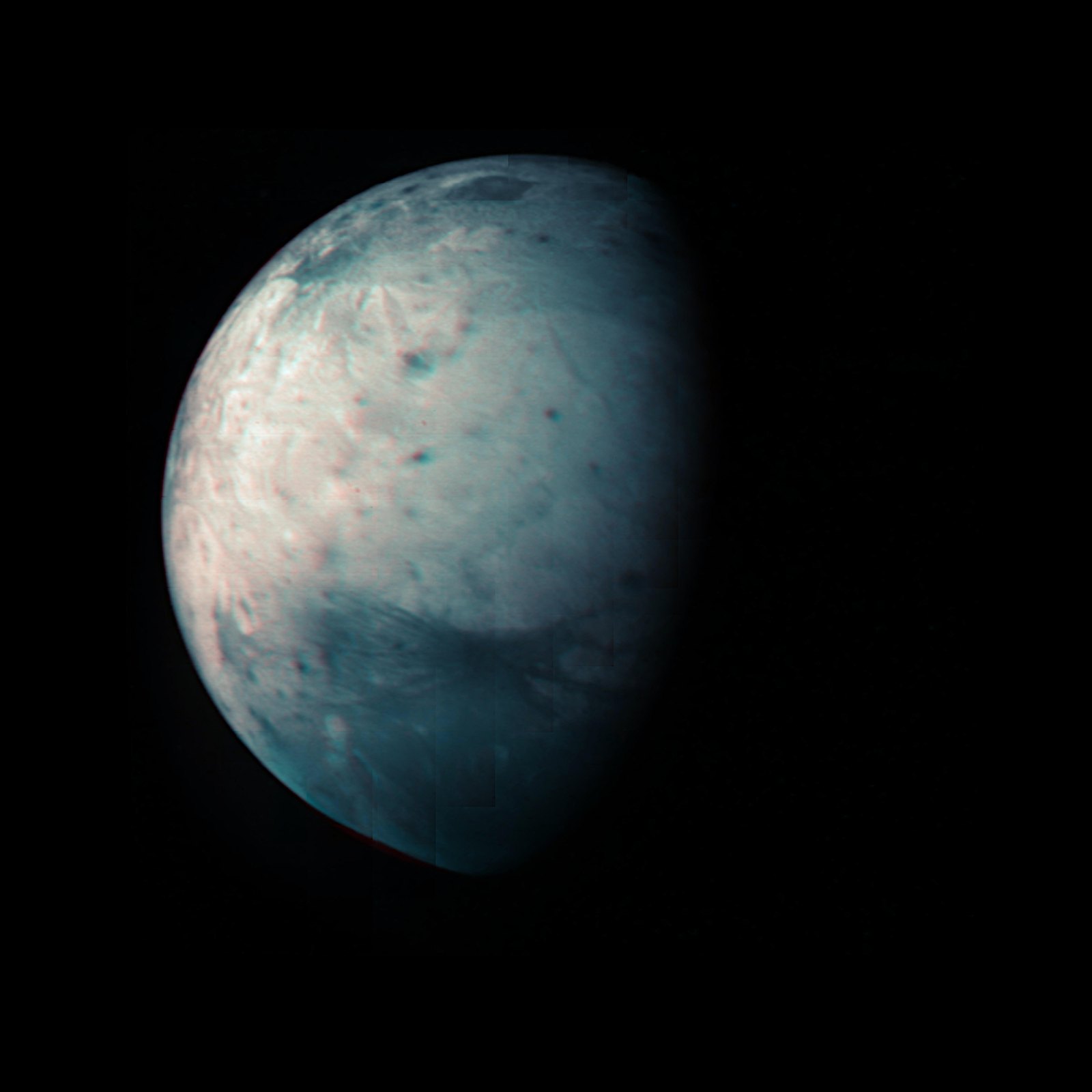
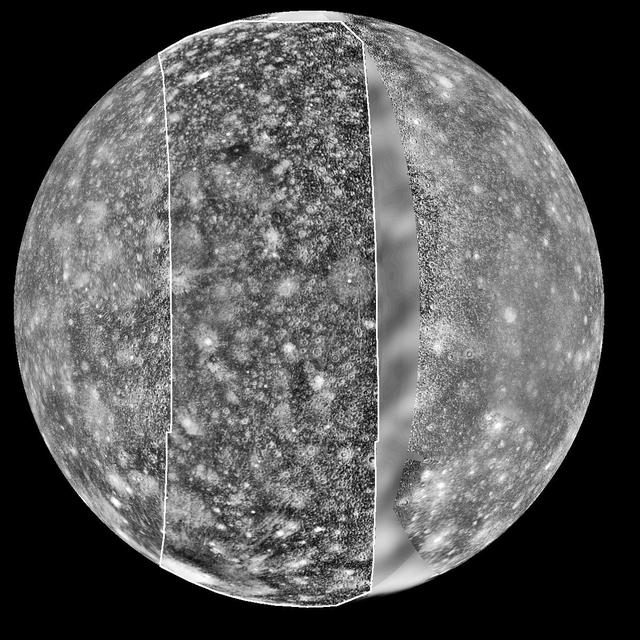
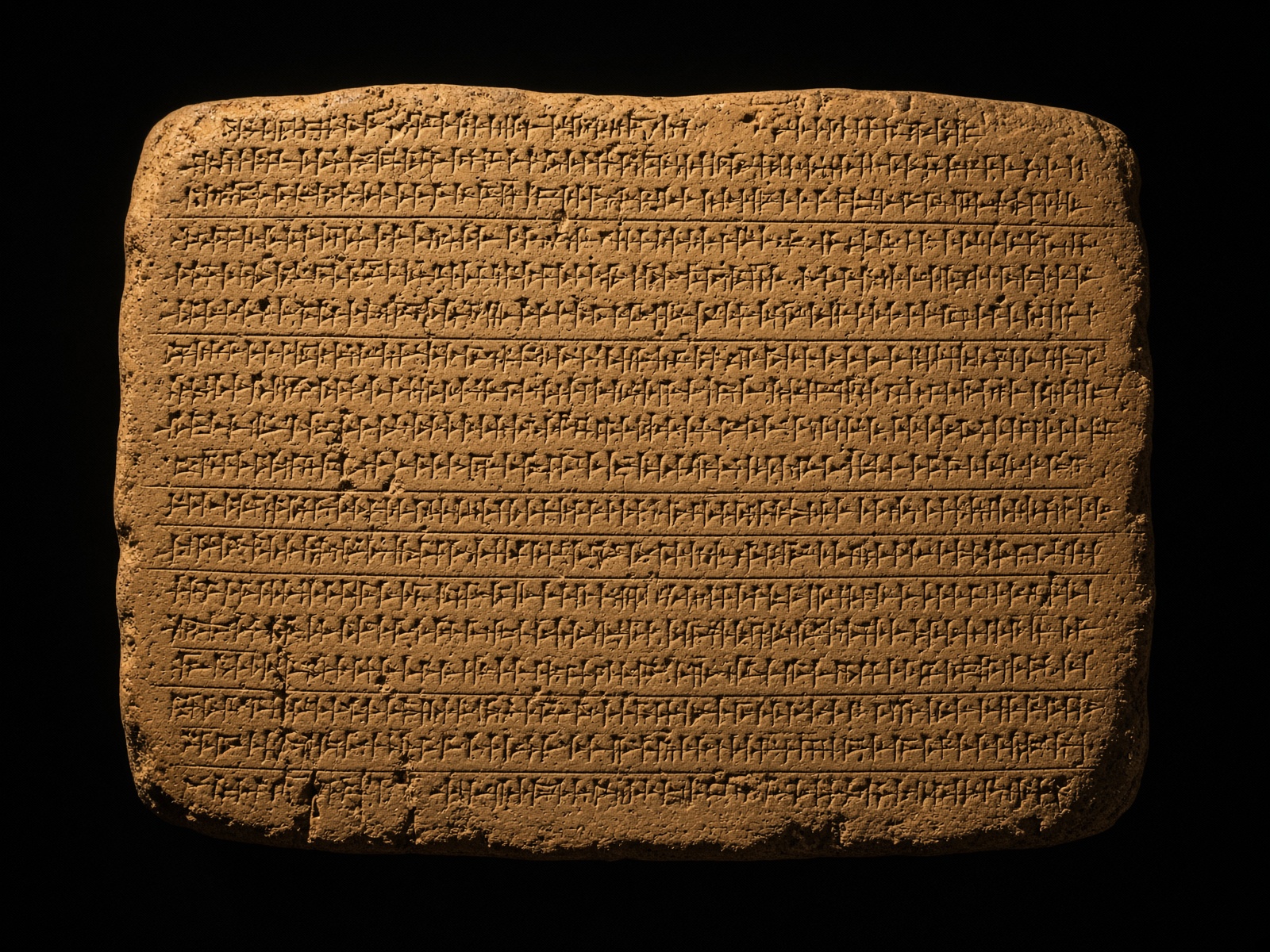
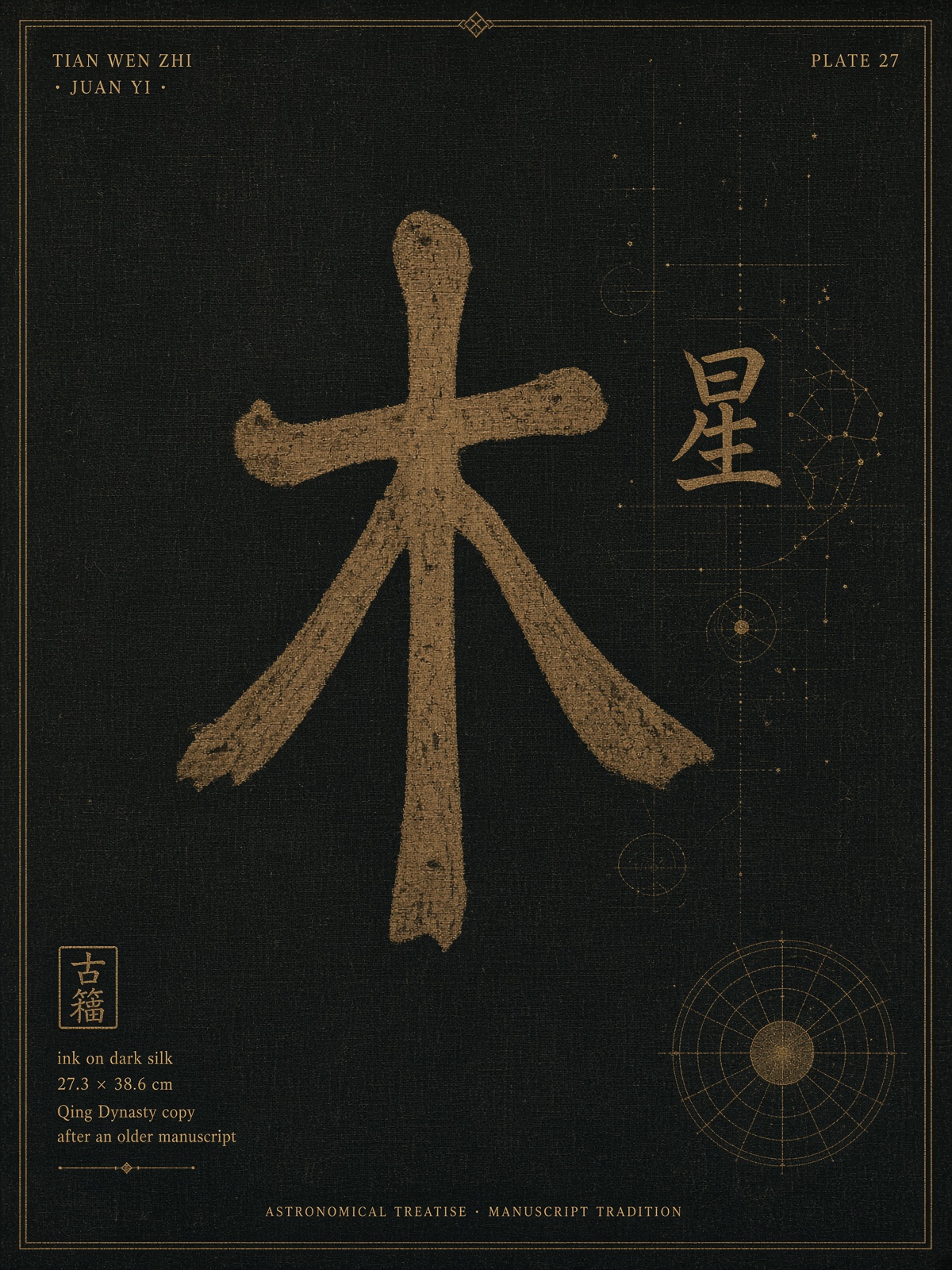
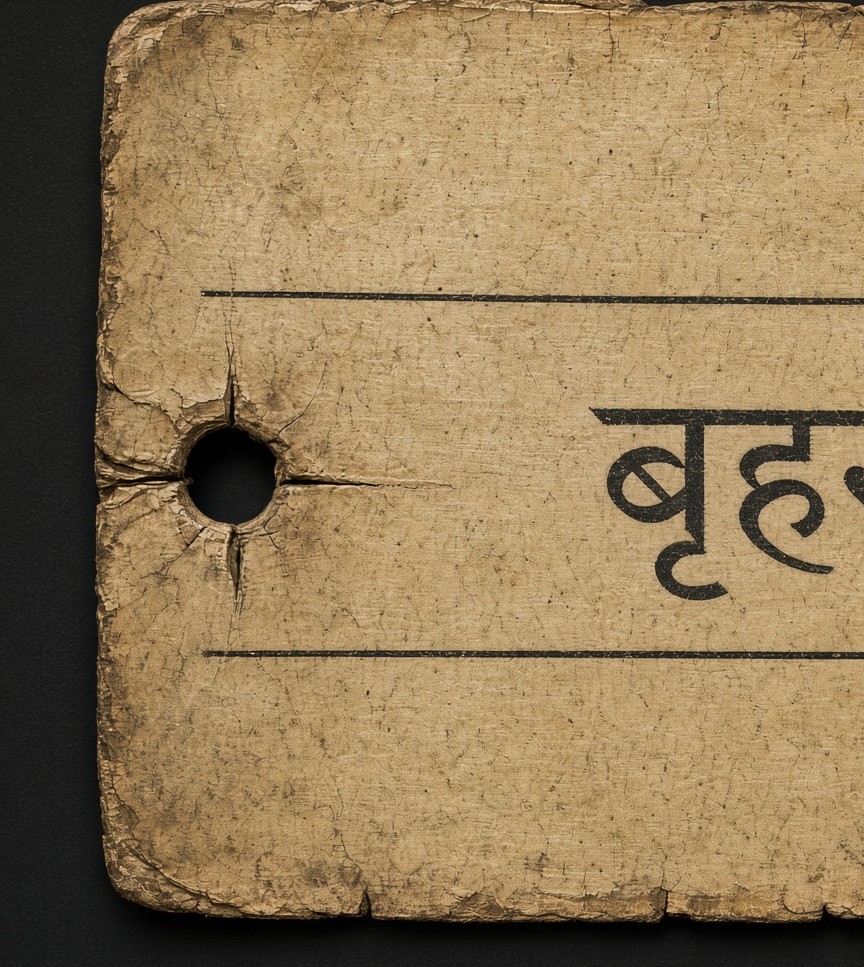
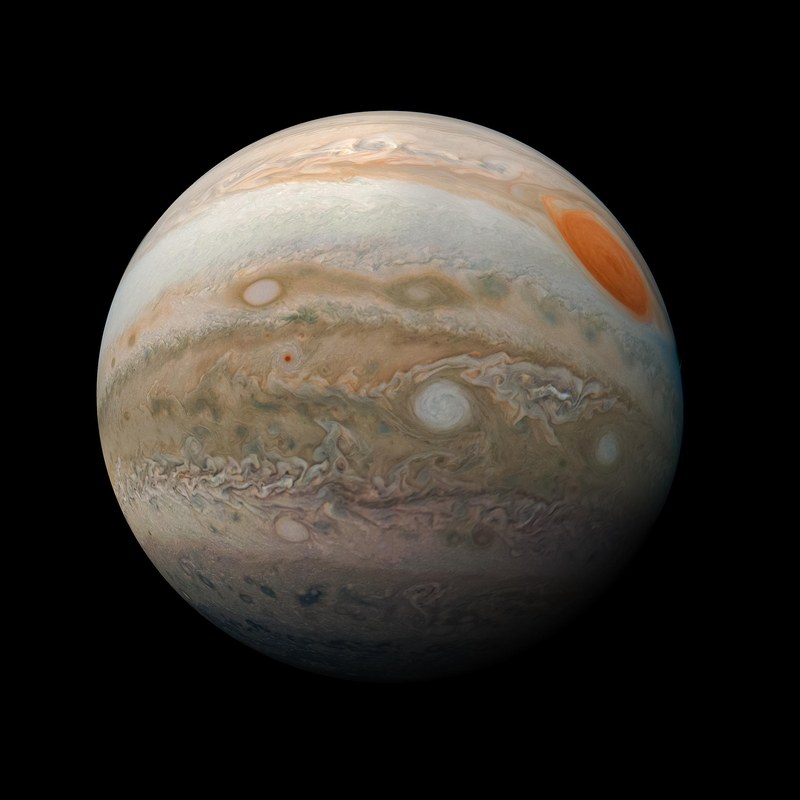
You arrive where there is no ground. Cream and rust bands turn. A storm the size of Earth holds. A magnetic field outspans the Sun. Hydrogen is crushed until it conducts. Jupiter does not offer a place to stand. It offers relations: moons, a lock of times, weather that is a climate. The globe in the photograph is later looking. For millennia it was only a lamp.
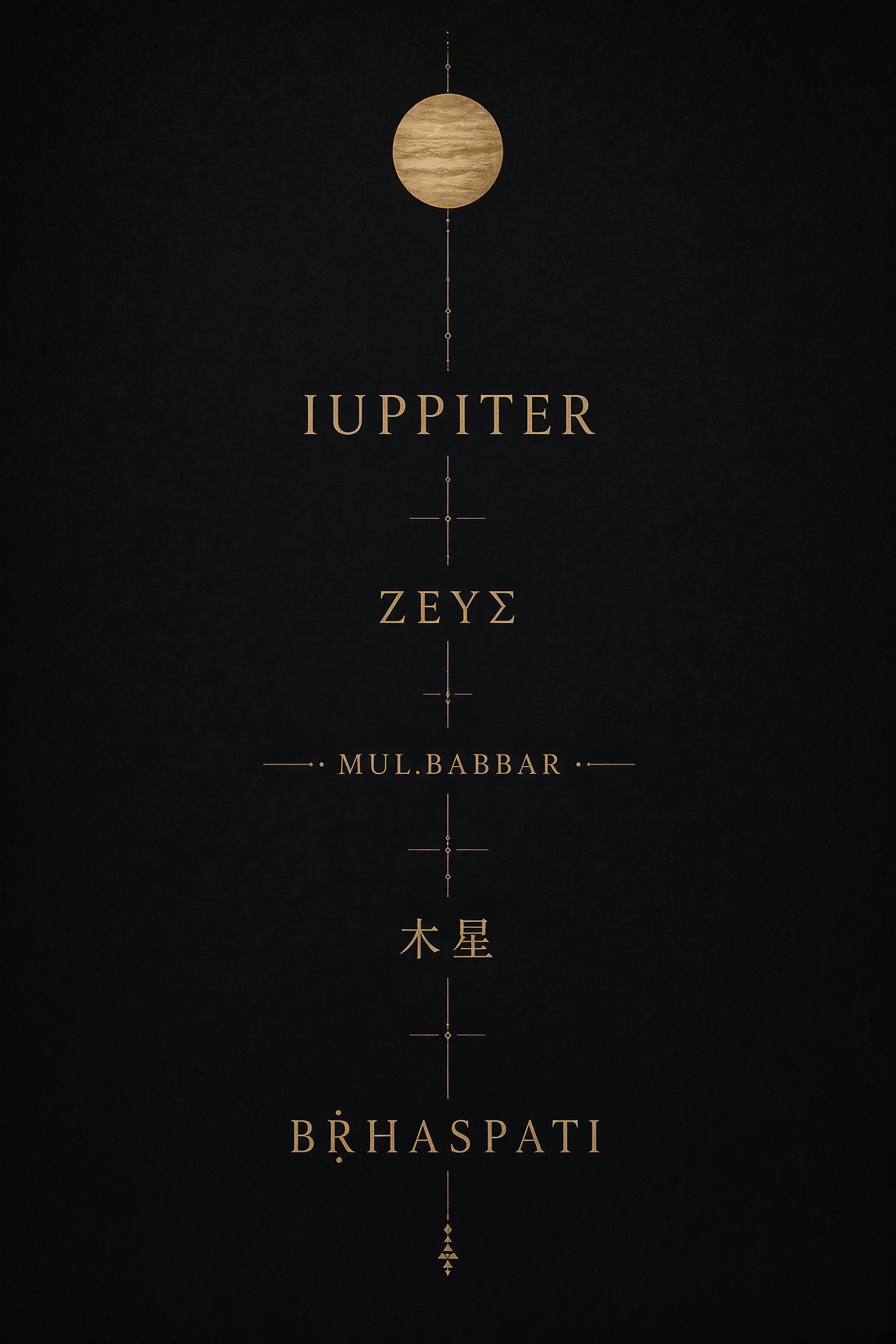
If ranking is what you came for, it is fifth from the Sun. The Greeks had a better first word. They called such lamps πλανῆται, planētai, wanderers, from πλανᾶσθαι, to wander, because they would not keep their seats among the fixed stars. This one is slow and bright, and sometimes it loops backward. English still says planet. The word is a motion. A wanderer is a problem the sky poses.
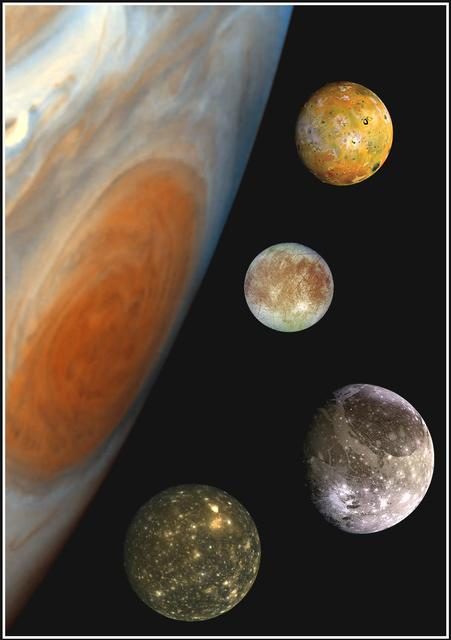
Someone had to look. In Padua, in January 1610, a homemade tube found points of light that would not keep the fixed-star seats. They stayed with Jupiter and changed places with one another. They went around it. A center that was not Earth became visible. Sixty-six years later, in Paris, Io’s eclipses arrived late when Earth receded, and light was shown to take time. The universe changed instrument here.
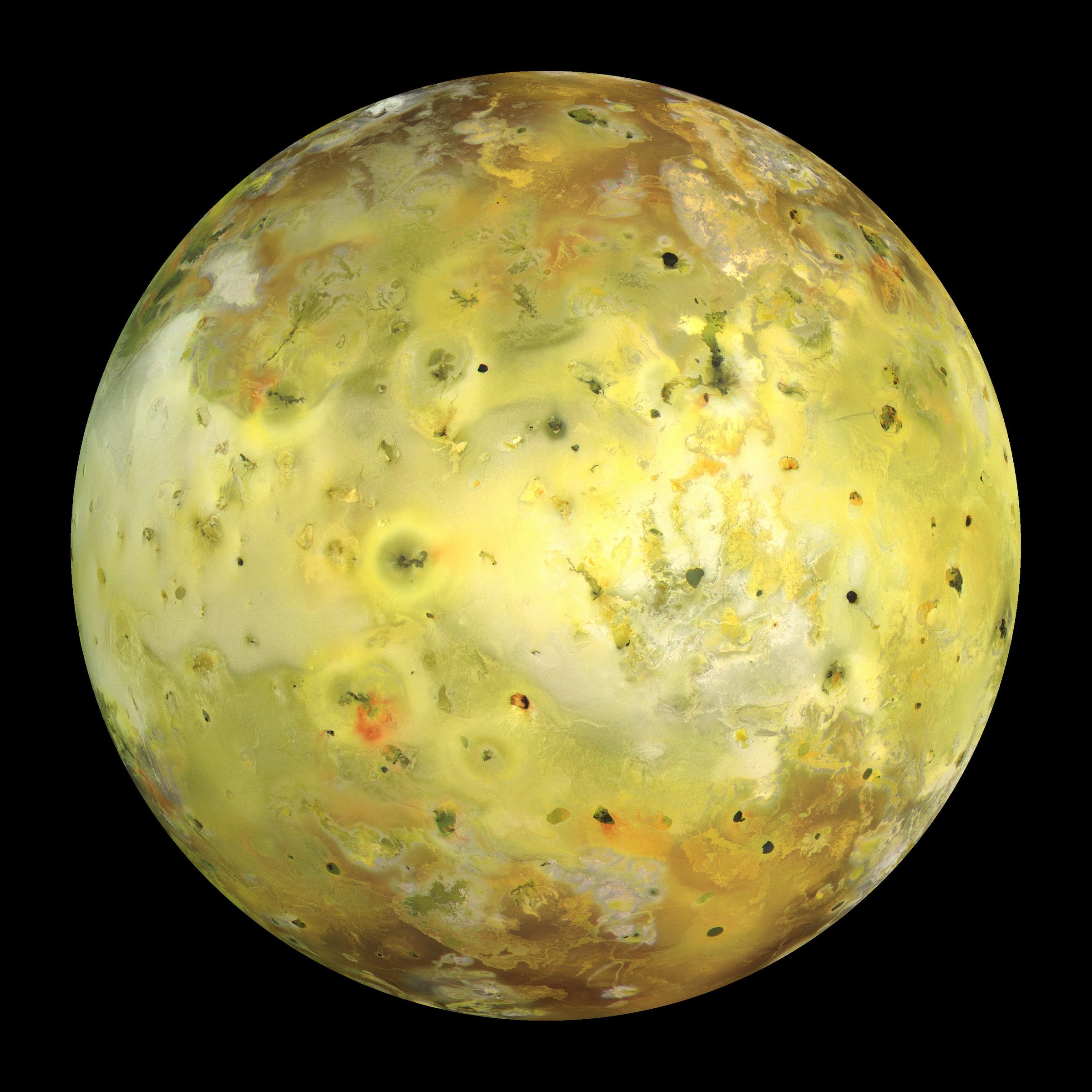
What follows is that looking, in order. The storm first, because the climate is what you can photograph. Then the field the giant organizes. Then four worlds, and the 4 : 2 : 1 lock that keeps three of them. Then a clock that ran late, names that disagree, and one dated recovery from the Book.